
Alloy Bellows

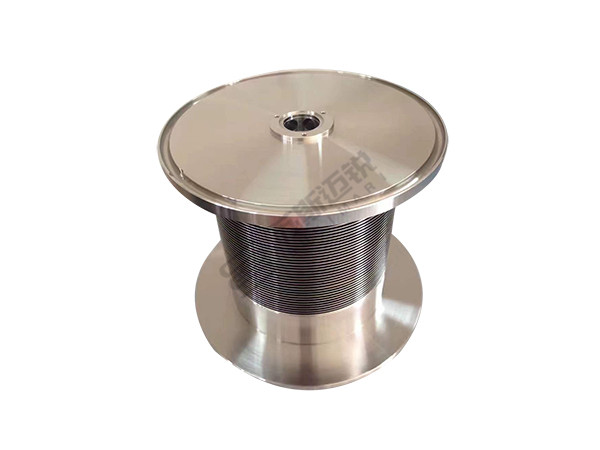

Alloy corrugated pipes have corrosion resistance and are mainly used to compensate for pipeline thermal deformation, shock absorption, and absorb pipeline settlement deformation. They are widely used in industries such as petrochemical, instrumentation, aerospace, chemical, power, cement, metallurgy, etc. Common ones include
Nickel chromium alloy INCONEL 625 INCONEL 718 Hastelloy alloy titanium alloy
Hastelloy alloy is a type of nickel based alloy, currently mainly divided into three series: B, C, and G. It is mainly used in strong corrosive media such as iron-based Cr Ni or Cr Ni Mo stainless steel, non-metallic materials, etc. It has been widely used in many fields such as petroleum, chemical, and environmental protection abroad. Its brand and typical usage scenarios are shown in the table below.
| Hastelloy alloy grades | |||
| Alloy grade | N10001(B) | N10276(C-276) | N06007(G) |
| N10665(B-2) | N06022(C-22) | N06985(G-3) | |
| N10675(B-3) | N06455(C-4) | N06030(G-30) | |
| N10629(B-4) | N06059(C-59) | ||
| Main alloying elements | Ni-Mo | Ni-Cr-Mo | Ni-Cr-Fe-Mo |
| Typical use cases |
Reducing media such as hydrochloric acid |
Mixed medium with both oxidizing and reducing properties |
Phosphoric acid, sulfuric acid, sulfate, etc. |
Inconel 625 nickel chromium alloy is an austenitic superheat resistant alloy mainly composed of nickel. Originating from the strengthening effect of molybdenum and niobium solid solutions contained in nickel chromium alloys, it has ultra-high strength and extraordinary fatigue resistance at low temperatures up to 1093 ℃, and is widely used in the aviation industry.
This alloy has high formability and is easier to weld than many nickel based alloys. Under the conditions of being welded, the alloy still has the ability to resist intergranular corrosion. It has good tensile and fatigue properties from low temperature to 980 ℃, and is resistant to stress corrosion under salt spray atmosphere. Typical applications include aviation engine components, jet aircraft engines, aerospace structural components, chemical equipment, bellows expansion joints, modern waste disposal equipment, situations that come into contact with seawater and withstand high mechanical stress, marine structures, saline environments, etc
INCONEL 718 is used in many high-tech and important industrial applications.
Due to its high intensity under temperature conditions at both ends of the spectrum, it is often chosen by design engineers. It can be used in environments ranging from low to high 704 ° C. Throughout the entire range, it exhibits abnormally high yield, tensile, and creep fracture performance. It also exhibits excellent tensile strength and impact strength.
This alloy is composed of 50-55% nickel+cobalt (with a high cobalt content limit of 1%) and 17-21% chromium. This combination gives the material corrosion resistance. This includes good antioxidant properties, allowing it to withstand corrosive media present in many applications.
The remaining components include niobium+tantalum (4.75-5.5%), molybdenum (2.8-3.3%) and titanium (0.65-1.15%), as well as other equilibrium elements. This is an effective and balanced combination of elements that gives high-temperature alloys ideal technical performance.
Titanium alloy has good heat resistance, strength, plasticity, toughness, formability, weldability, corrosion resistance, and biocompatibility, and has become an excellent alloy in the titanium alloy industry. The usage of this alloy accounts for 75% to 85% of all titanium alloys. The main focus is on developing aviation engines.
Company Profile
We independently develop, design and produce various specifications and models of metal bellows, semiconductor equipment accessories, vacuum and ultra-vacuum equipment accessories, etc. We have modern clean workshops, complete production facilities and perfect technology, and have dozens of special production equipment for bellows welding, CNC machining centers, imported precision punching machines, and imported high-sensitivity leak detection equipment.
Industry Applications
The welded bellows produced by our company are widely used in vacuum equipment, chemical engineering, vacuum sealing, flexible connection, pressure sensing, stiffness compensation, biopharmaceuticals, electronic engineering, petrochemicals, mining and smelting, aerospace and other industrial fields.

FAQ
1、How to choose the material for vacuum welding bellows?
The selection of vacuum welding bellows materials should be based on multiple factors, mainly including the following points:
Corrosion resistance: Since the vacuum environment has high requirements for the purity of the material, the selected material should have good corrosion resistance to ensure that it is not corroded by the medium or environment during long-term use.
Strength and toughness: Vacuum welding bellows need to withstand certain pressure and displacement, so the material must have sufficient strength and toughness to ensure the stability and reliability of the bellows.
Weldability: The material should be easy to weld and ensure the quality of the welded joint to avoid defects such as cracks and pores.
Purity: The purity of the material is also one of the important factors in selection. High-purity materials help reduce the influence of impurities during welding and improve welding quality.
Applicable temperature range: According to the temperature requirements of the specific application scenario, select materials that can work stably within this temperature range.
Taking the above factors into consideration, stainless steel (such as 304, 316L, etc.) and titanium alloys are commonly used vacuum welding bellows materials. These materials not only have good corrosion resistance and strength, but are also easy to process and weld, and can meet the use requirements in most vacuum environments. When choosing, further evaluation and selection are required based on specific application scenarios and needs.
2、Can elastic components withstand high temperature and high pressure environments?
Whether elastic elements can withstand high temperature and high pressure environments depends on their specific materials, designs, and application scenarios.
Some elastic elements, such as wire braided springs and specific metal seals, can withstand high temperature and high pressure environments to a certain extent. However, their tolerance is limited, especially under extreme high temperature and high pressure conditions, the resilience may drop sharply or even be completely lost. In addition, the stability of elastic elements at high temperatures is also affected by the materials of their outer heat protection and wear-resistant layers.
For equipment that needs to work in extreme high temperature and high pressure environments, elastic elements designed for these conditions should be selected to ensure that they have sufficient resilience, sealing, and stability. At the same time, factors such as the corrosion resistance and service life of the elastic elements need to be considered to ensure the long-term reliable operation of the equipment.
In general, although some elastic elements can withstand high temperature and high pressure environments to a certain extent, they need to be carefully evaluated and tested according to specific conditions when selected and used.
3、What temperature environments are alloy bellows suitable for?
The temperature environment applicable to alloy bellows varies due to its material properties and design. Generally speaking, alloy bellows can be applied to a wide temperature range, but the specific applicable temperature needs to be determined according to the alloy material used for the bellows. For example, some alloy bellows may be able to work stably in an environment as low as tens of degrees below zero, and at the same time, there are alloy bellows that can withstand high temperature environments up to hundreds of degrees.
In particular, Hastelloy bellows are often used to handle high temperature, high pressure and highly corrosive media such as steam, high temperature liquids and a variety of corrosive media due to their excellent corrosion resistance and high temperature stability. However, when the operating temperature exceeds the limit of the material, additional insulation measures may be required or alloy materials with higher temperature tolerance may be selected.
In summary, alloy bellows are suitable for a wide range of temperature environments, but the specific temperature range needs to be determined according to material properties and application scenarios.


Contact US
Product Information
Quantity
Unit
Piece
Support order samples, customization, wholesale direct, and complete payment. If the product you look for does not have corresponding customized content, pls fill out the form below to contact us, and we will reply ASAP.